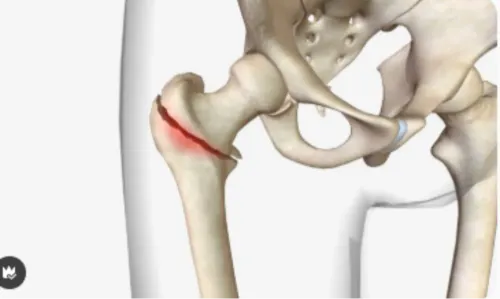
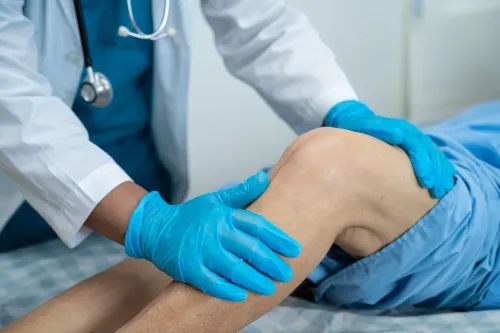
Hip avascular necrosis, also known as osteonecrosis, develops when the blood supply to the femoral head—the ball-shaped upper end of the thigh bone—is reduced. Without adequate blood flow, the bone may weaken and gradually collapse. If the condition progresses, the smooth surface of the hip joint can become damaged and lead to secondary arthritis.
The condition may affect one or both hips. Early diagnosis matters because joint-preserving treatment is generally more feasible before the femoral head loses its shape.
What Causes Hip Avascular Necrosis?
Avascular necrosis can occur after an injury that disrupts blood flow to the hip. It may also be associated with prolonged or high-dose steroid use, excessive alcohol consumption, certain blood disorders, autoimmune conditions, or previous medical treatment.
In some patients, no specific cause can be identified.
Common symptoms include:
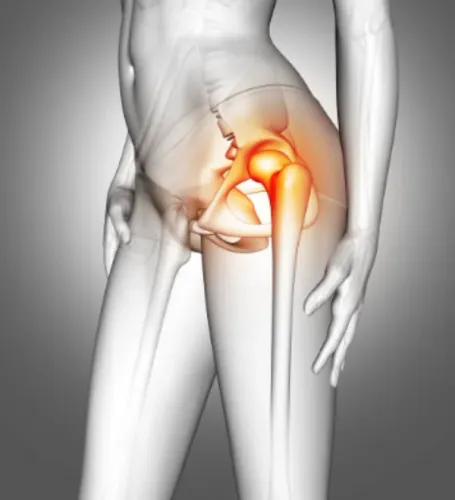
- Deep pain in the groin, buttock, or upper thigh
- Discomfort while standing or walking
- Pain when rotating the hip
- A gradually developing limp
- Reduced hip movement
- Pain at rest as the condition progresses
Early-stage AVN may produce minimal symptoms. Standard X-rays can also appear normal initially, which is why an MRI may be recommended when the clinical findings raise concern.
How Is the Stage of AVN Determined?
Treatment depends heavily on whether the femoral head has retained its normal shape. Imaging is used to assess the size and location of the affected area, the presence of bone collapse, and any resulting arthritis.
The condition can broadly be understood in two phases:
- Pre-collapse AVN: The bone has been affected, but the rounded shape of the femoral head remains intact.
- Post-collapse AVN: The weakened surface has started to flatten or collapse, often leading to cartilage damage and arthritis.
This distinction is important because a treatment that may help preserve an early-stage hip may offer limited benefit once advanced collapse has occurred.
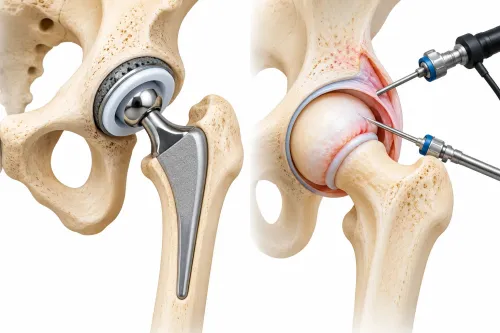
Joint-Preserving Treatment Versus Hip Replacement
In early disease, treatment may focus on protecting the natural joint. Options vary according to the patient’s age, symptoms, stage, and size of the affected area. Activity modification, walking support, medication, and monitored rehabilitation may be used in selected cases.
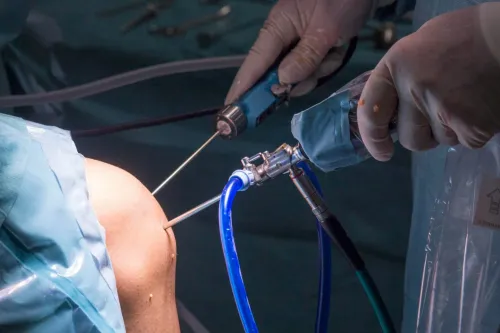
Core decompression is a joint-preserving procedure that creates channels in the affected bone. Its purpose is to reduce pressure and support the healing response. Some patients may require additional bone grafting or other biological support, depending on the extent of damage.
When the femoral head has collapsed and pain significantly limits movement, hip replacement may provide a more predictable solution than an attempted preservation procedure.
Evaluating Hip AVN in Bengaluru
In Bengaluru, patients sometimes delay assessment because the initial discomfort resembles a muscle strain or ordinary hip pain. Continued walking, gym activity, or self-medication does not address the underlying interruption to the bone’s blood supply.
Dr Akshay Dhanda evaluates the symptom history, risk factors, hip movement, walking pattern, and imaging before recommending treatment. Bringing previous MRI scans, X-rays, medicine records, and details of steroid use can support a more complete assessment.
Questions Worth Asking
Before selecting treatment, ask:
- Has the femoral head started to collapse?
- How much of the bone is affected?
- Is joint preservation still realistic?
- What happens if treatment is postponed?
- Will weight-bearing need to be restricted?
- What rehabilitation will follow the procedure?
Hip AVN does not have one standard treatment for every patient. The most suitable approach depends on accurate staging and realistic expectations.
If persistent groin pain, limping, or restricted hip movement is affecting daily life, schedule a consultation with Dr Akshay Dhanda in Bengaluru for a detailed evaluation and stage-appropriate treatment plan.
Keywords