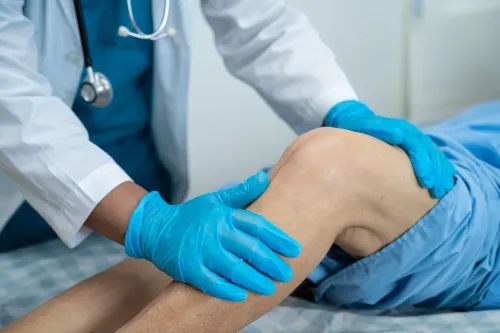
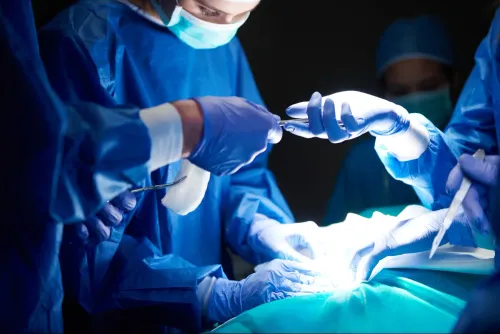
Joint preservation treatment aims to protect a person’s natural joint, reduce pain, and delay or avoid replacement surgery where medically possible. It may be considered when damage is limited to a specific area and enough healthy cartilage, bone, and supporting tissue remain.
These procedures are commonly evaluated for younger or physically active patients, although age alone does not determine eligibility. The location and extent of damage, joint alignment, ligament stability, and treatment goals are more important.
When Is Joint Preservation Considered?
Joint preservation may be explored when a patient has:
- Localised cartilage damage
- Early-stage arthritis
- Abnormal joint alignment
- Meniscal deficiency or a repairable tear
- Ligament instability
- Early avascular necrosis
- Selected osteochondral injuries
- Persistent pain despite structured rehabilitation
The objective is to identify and correct the factor placing abnormal stress on the joint. Treating pain without addressing instability, poor alignment, or damaged load-bearing tissue may provide only temporary improvement.
What Does the Evaluation Include?
Dr Akshay Dhanda assesses the joint as a complete functional unit. The evaluation may include symptom history, activity level, walking pattern, limb alignment, joint movement, muscle strength, ligament stability, and previous treatments.
Standing X-rays can show how body weight passes through the joint. MRI may help evaluate cartilage, ligaments, menisci, tendons, or bone. In selected cases, specialised imaging may be required to understand rotational alignment or the extent of bone damage.
Patients should bring earlier scans, operation records, physiotherapy details, and information about previous injections to the consultation.
Which Procedures May Preserve a Joint?
Joint preservation is not a single operation. Depending on the underlying problem, treatment may involve:
- Meniscal repair
- Ligament reconstruction
- Cartilage restoration
- Core decompression for selected early-stage AVN
- Realignment osteotomy
- Removal of unstable fragments
- Correction of mechanical impingement
- Combined procedures addressing more than one abnormality
A successful plan may require treatment of both the damaged tissue and the mechanical cause. For example, repairing cartilage without correcting significant malalignment may leave the repaired area under continued pressure.
Joint Preservation or Joint Replacement?
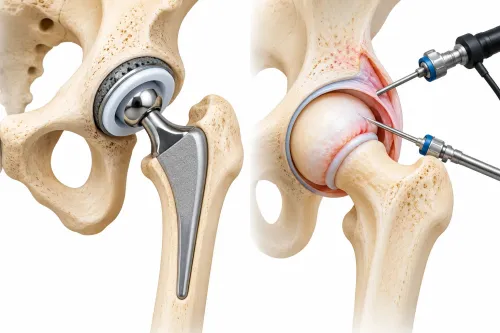
Joint-preserving treatment retains the natural joint and may support continued activity. However, rehabilitation can be demanding, and results depend on careful patient selection.
Joint replacement is generally more appropriate when damage is widespread, the joint surface has substantially collapsed, deformity is advanced, or pain severely restricts everyday movement. Attempting a preservation procedure in a joint with extensive arthritis may delay more suitable care without delivering dependable relief.
Useful questions to ask include:
- Is the damage localised or widespread?
- How much healthy cartilage remains?
- Is poor alignment contributing to the problem?
- Are the ligaments and menisci functional?
- What improvement is realistic?
- Could replacement still be required later?
Choosing Joint Preservation Care in Bengaluru
Patients comparing joint preservation options in Bengaluru should look for an assessment that connects imaging with symptoms and movement. A recommended procedure should have a specific purpose, whether that is unloading a damaged area, improving stability, preserving tissue, or correcting alignment.
The recovery plan should also be discussed before surgery. Some procedures require temporary restrictions on weight-bearing, followed by gradual strengthening and movement training.
Joint preservation is most effective when the condition is identified before damage becomes advanced. If recurring joint pain, swelling, instability, or activity limitations have continued despite treatment, consult Dr Akshay Dhanda in Bengaluru for a detailed assessment of whether preserving the natural joint remains a realistic option.
Keywords