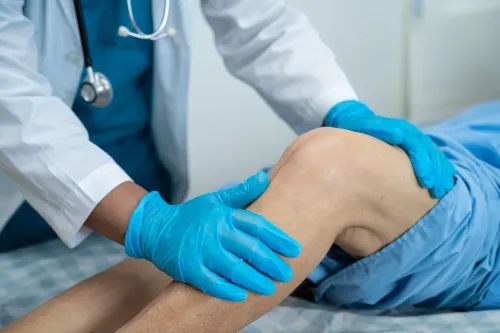
The meniscus is a crescent-shaped structure that sits between the thigh bone and shin bone. Each knee has two menisci, which help distribute load, absorb shock, support stability, and protect the joint cartilage.
A meniscal tear can occur during twisting injuries or develop gradually as the tissue changes with age. Treatment depends on the tear pattern, location, symptoms, tissue quality, and whether other knee injuries are present.
What Does a Meniscal Tear Feel Like?
Symptoms can vary considerably. Some people experience sharp pain immediately after twisting the knee, while others develop discomfort gradually.
Possible signs include:
- Pain along the inner or outer joint line
- Swelling after activity
- Clicking or catching sensations
- Difficulty bending or straightening the knee
- Pain while squatting or turning
- A feeling that the knee is locking
- Reduced confidence while walking
Not every click indicates a meniscal tear, and not every MRI-confirmed tear requires surgery. Clinical examination remains important because imaging findings may not always explain the symptoms.
Can a Meniscal Tear Heal Without Surgery?
The outer portion of the meniscus receives a better blood supply than the inner portion. Small, stable tears in the vascular region may have greater healing potential. Some tears can be managed with activity modification, physiotherapy, muscle strengthening, and symptom control.
Non-surgical treatment may be suitable when the knee remains stable, symptoms are improving, and there is no persistent mechanical locking.
Surgical assessment becomes more relevant when the knee repeatedly locks, symptoms remain limiting despite rehabilitation, or the tear is associated with an ACL injury.
Meniscal Repair Versus Partial Meniscectomy
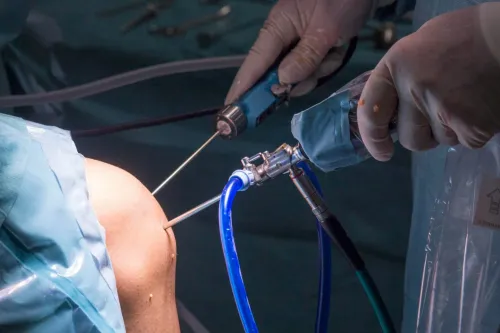
Meniscal repair aims to preserve the torn tissue by fixing it with sutures or specialised devices. Preserving functional meniscal tissue may provide better long-term protection for the knee, but the repair needs time to heal and requires a more cautious rehabilitation period.
Partial meniscectomy removes only the unstable or irreparably damaged portion while retaining as much healthy tissue as possible. Recovery may initially be quicker, but removing meniscal tissue reduces the knee’s shock-distributing capacity.
The choice depends on factors such as:
- Tear location and pattern
- Size and age of the injury
- Tissue quality
- Patient age and activity goals
- Knee alignment
- Associated cartilage damage
- Presence of ACL instability
Repair is desirable when the tear has realistic healing potential. Attempting to repair unsuitable tissue may not provide a dependable result.
Meniscal Treatment Planning in Bengaluru
For people in Bengaluru who play badminton, football, cricket, or participate in gym-based activities, a twisting knee injury may initially be mistaken for a minor sprain. Continuing sport despite swelling, locking, or instability can aggravate the problem.
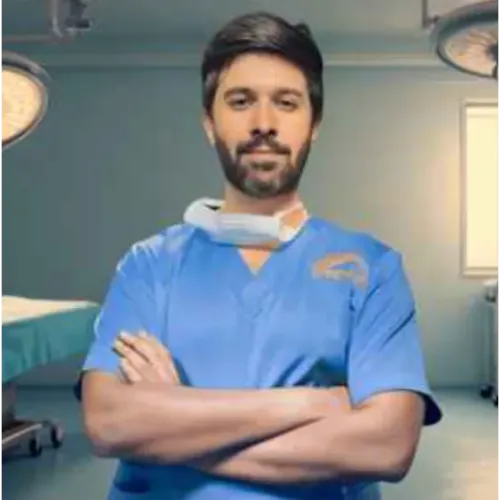
Dr Akshay Dhanda assesses the injury mechanism, joint-line tenderness, knee movement, stability, and MRI findings. The evaluation helps determine whether rehabilitation, repair, or limited removal is the most appropriate approach.
What Is Recovery Like After Repair?
Rehabilitation after meniscal repair is designed to protect healing tissue while gradually restoring movement and strength. Depending on the tear and repair method, temporary restrictions may apply to weight-bearing, knee bending, squatting, running, and pivoting.
Patients should follow the prescribed progression rather than comparing their recovery with someone who underwent simple arthroscopy or partial meniscectomy.
Persistent locking, swelling, or joint-line pain deserves a proper knee evaluation. For meniscal tear assessment and joint-preserving treatment in Bengaluru, consult Dr Akshay Dhanda to understand whether repair is feasible and what recovery may involve.
Keywords